Does a lumbar disc herniation always need surgery?
Deciding whether a lumbar disc herniation needs surgery involves MRI, leg pain, sensation, strength and its effect on daily life. Many people can consider nonsurgical care first, while urgent warning signs or persistent severe nerve symptoms need appropriate specialist assessment.
On this page
What is a lumbar disc herniation?
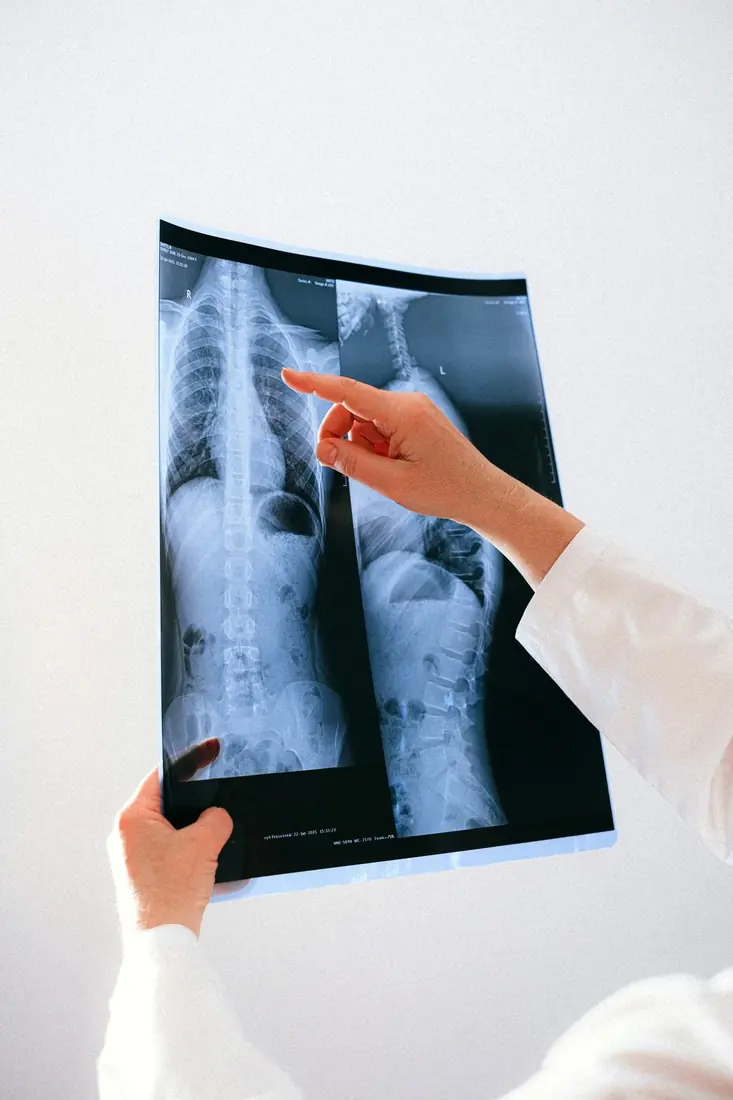
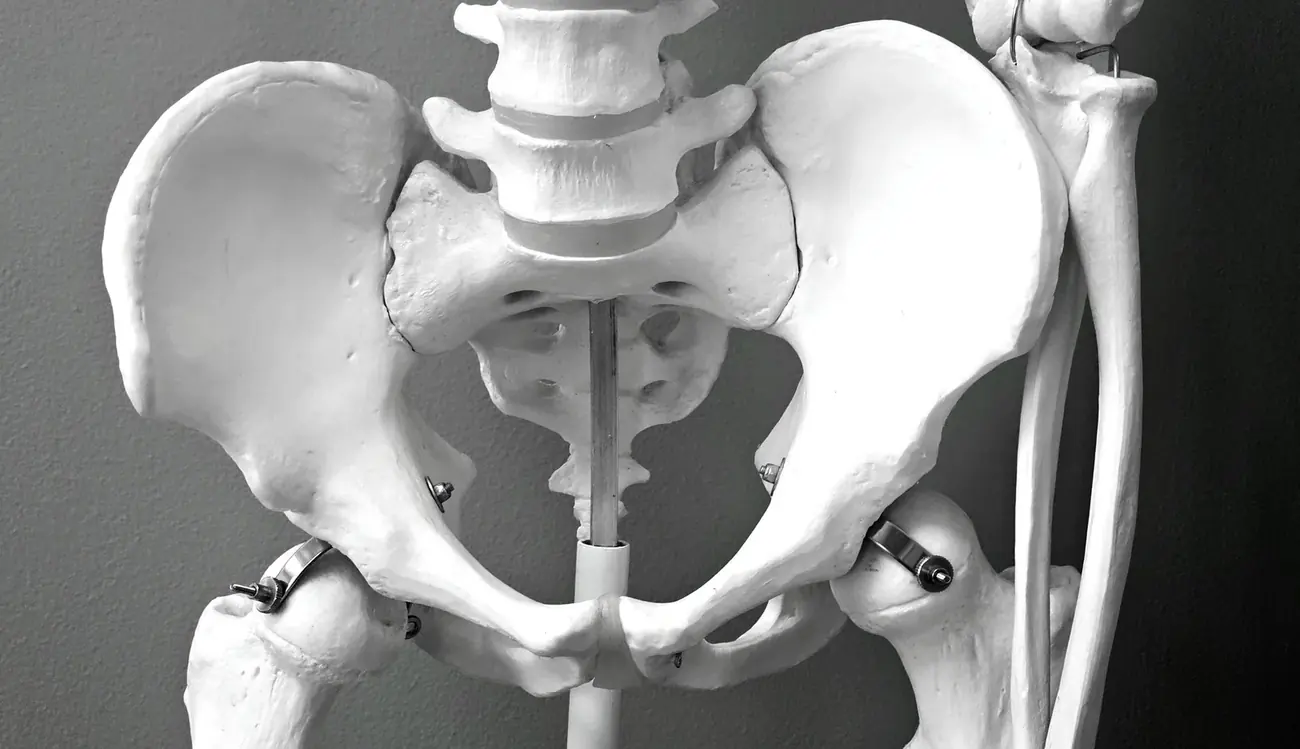
The lumbar spine consists of several vertebrae, with discs between adjacent bones that help distribute load and allow movement.
A disc has a central nucleus pulposus and an outer annulus fibrosus. When disc tissue extends beyond its usual space, imaging may describe different appearances, including a disc bulge, protrusion or extrusion.
These terms describe imaging appearances. Their size or shape alone cannot establish pain severity or determine whether surgery is needed.
Does a herniated disc always cause back pain?
No.
A systematic review in the American Journal of Neuroradiology analysed spinal imaging in 3,110 people without related symptoms. Findings such as disc degeneration and bulging were also common in people without back pain and became more frequent with age.
The review estimated that about half of asymptomatic people aged 40 had a disc bulge.
An abnormal imaging finding is therefore not necessarily a symptomatic disease. It must be compared with the patient's clinical presentation.
Back pain may involve musculoskeletal and other factors. Finding a herniated disc does not justify attributing every symptom to that location.
How are disc herniation and sciatica related?
When herniated tissue irritates or compresses a nearby nerve root, it may contribute to lumbar radiculopathy and symptoms commonly described as sciatica.
Alongside back pain, symptoms may include:
1. Radiating pain through the buttock, back of the thigh or calf.
2. Leg numbness, tingling or altered sensation.
3. Reduced strength in particular muscles, such as difficulty lifting the ankle or extending the toes.
4. Leg pain aggravated by coughing, sneezing or certain lumbar movements in some people.
These symptoms are not unique to disc herniation. Strength, sensation, reflexes and neural tension tests help assess whether the presentation fits a particular nerve-root distribution.
Can a herniated disc improve without surgery?
Some disc-related symptoms gradually improve without surgery.
As inflammation settles, nerve sensitivity reduces and the body readapts to everyday loads, pain and function may improve considerably for some people.
Some herniations can also shrink or resorb over time, particularly certain extruded discs.
This does not mean that every herniation disappears, or that changes on imaging and pain relief happen at the same time.
Treatment progress should therefore include neurological function, pain and daily activity capacity, rather than focusing only on the size of a disc abnormality on MRI.
What nonsurgical options are available?
For people without emergency features or seriously worsening neurological function, suitable nonsurgical management can usually be considered first.
Common approaches include:
Activity and load management: temporarily reduce activities that clearly provoke leg symptoms while maintaining tolerable daily activity.
Exercise rehabilitation: progressively restore lumbar, hip and leg movement and build strength and endurance according to symptoms and function.
Pain management: a medical doctor may assess whether short-term medication is appropriate. In selected cases of severe acute sciatica, an appropriately qualified medical professional may consider an epidural injection or another intervention.
Manual therapy: this may form part of an overall plan for selected patients, but should not be described as pushing a herniated disc back into place.
When should surgery be considered?
Prolonged conservative care is not appropriate for every disc herniation.
Persistent severe nerve-root pain that has not improved with appropriate nonsurgical treatment, together with MRI findings that match the clinical presentation, may warrant referral to a spinal specialist to discuss surgery.
Marked or progressive muscle weakness also warrants timely specialist assessment rather than simply waiting for symptoms to resolve.
New urinary retention, altered bladder or bowel control, loss of perineal sensation or rapidly worsening neurological function in both legs may indicate cauda equina syndrome. Attend an emergency department immediately for assessment.
Can you still exercise after a disc herniation?
Some people stop gym training, running and other exercise entirely after the diagnosis, fearing further damage.
Long-term avoidance of activity may not support recovery. For most people whose condition is stable, appropriate rehabilitation can gradually improve function and confidence in movement.
What generally needs adjusting is exercise load, intensity and progression, rather than permanently banning every movement involving the lumbar spine.
Overall, a herniated disc does not automatically mean surgery. What matters is whether the imaging fits the symptoms, whether neurological function is affected and whether nonsurgical treatment improves daily activities. Appropriate assessment can reduce unnecessary fear while avoiding delay when specialist care is needed.
References
- Brinjikji W, et al. (2015). Systematic Literature Review of Imaging Features of Spinal Degeneration in Asymptomatic Populations. AJNR. Read study
- National Institute for Health and Care Excellence. Low back pain and sciatica in over 16s: assessment and management (NG59). Clinical guideline
- NHS. Slipped disc. Patient information
Further reading on low back pain
← Back to the low back pain overview
Written by: Dr Lui Kwan Long (Hong Kong Registered Chiropractor, Registration No. 449)
This article provides general health information and does not replace an individual clinical assessment.