Why does neck and shoulder discomfort keep returning? Common causes, relief and treatment
Written by Dr Lui Kwan Long, Registered Chiropractor. Registration No. CC000449
After each massage, the tightness and fatigue in your neck and shoulders seem to ease temporarily, but the same feelings soon return. If symptoms have not improved, is poor posture to blame?
Data show that up to 75% of people with neck pain can obtain symptom relief through conservative treatment, including cervical mobilisation, laser therapy, rehabilitation exercise and dry needling.
On this page
1. What commonly causes neck pain?
The causes of neck pain can broadly be divided into three categories: muscle or ligament injury, facet joint inflammation and nerve-related neck pain.
Muscle and ligament injuries
Working with the head lowered for long periods greatly increases the load on neck muscles. Prolonged poor posture or muscle overuse can leave some muscle fibres continuously contracted and unable to relax. These tight muscle fibres are medically described as trigger points. Sustained contraction compresses local capillaries, reduces circulation and further stimulates pain.
Around the neck and shoulders, trigger points commonly occur in the upper trapezius, levator scapulae, suboccipital muscles and scalene muscles.
Targeted treatment is particularly important for releasing trigger points. Diagnostic ultrasound can help a chiropractor identify their position accurately for more precise treatment. Once the position has been identified, dry needling, shockwave or hands-on trigger-point release can be used.
Facet joint inflammation
The facet joints lie at the back of the cervical spine, guiding neck movement and sharing the load. Injury or irritation of a joint or its capsule, or degenerative changes, may cause pain, including the familiar episode of waking with a stiff neck.
Patients often experience aching and stiffness on one or both sides of the neck, with more pain when looking up or turning the head. Pain may also spread to the back of the head or around the shoulder blade.
Treatment methods include laser therapy, high-velocity low-amplitude joint mobilisation and medium-frequency interferential current. These can effectively provide immediate pain relief and relax local muscle spasm.
Nerve-related neck pain
Nerve-related neck pain arises from irritation or injury of a nerve, commonly compression of a cervical nerve root. Main causes include a herniated disc and changes associated with cervical degeneration, such as bone spurs, reduced disc height and narrowed intervertebral foramina. These changes may compress a nerve root and bring on symptoms. Alongside neck pain, patients may have pain radiating towards the shoulder, arm or fingers, with numbness, pins and needles or reduced muscle strength.
For pain and restricted movement caused by nerve irritation, treatment combines joint mobilisation, neck and shoulder exercises and appropriate traction or decompression. The aims are symptom relief, better neck movement and a gradual return to everyday activities.
2. Why can computer work or looking down cause neck pain?
Patients often ask me in the clinic, “What is the best way to sit?” Most therapists would answer, “Straighten your back rather than hunching over.” That answer is not wrong: bending the back is associated with conditions such as disc herniation. But it overlooks an important point: remaining in any single posture for a long time can damage load-bearing structures and cause pain. There is therefore no perfect sitting posture. Getting up regularly, changing sitting position or using a sit-stand desk can effectively improve symptoms caused by poor posture.
3. Do I need an X-ray or MRI?
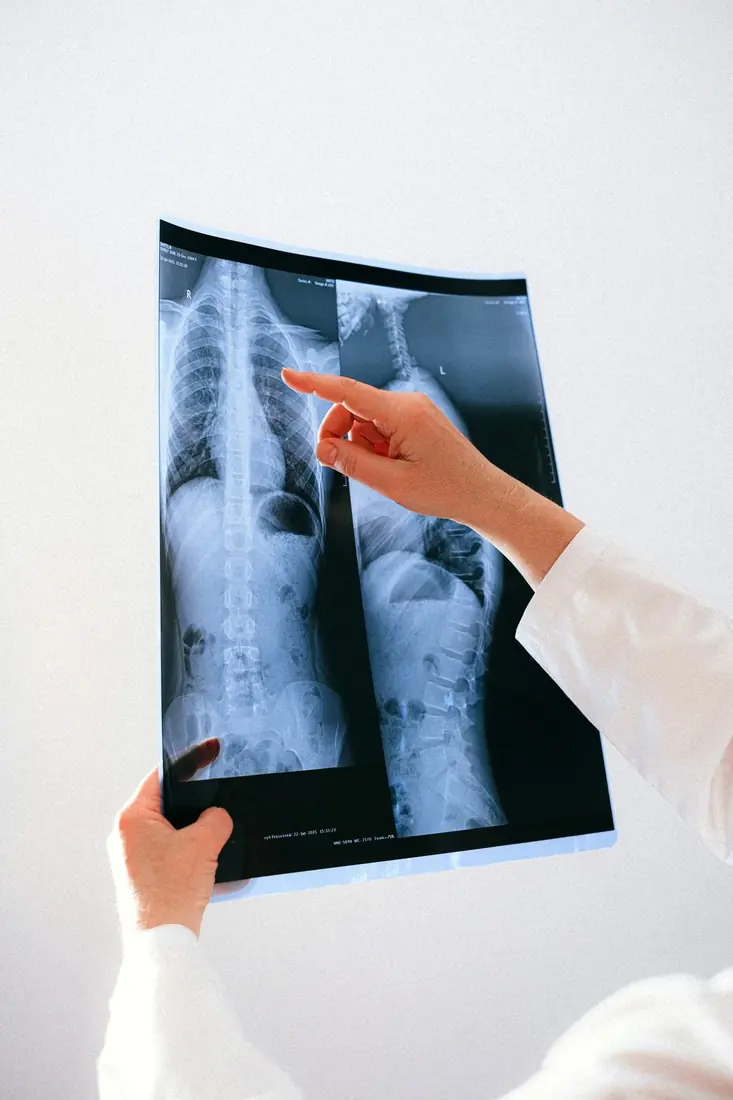
X-rays and magnetic resonance imaging (MRI) have different roles in assessing neck pain. X-rays mainly show bone alignment, bone spurs and changes in disc spaces and intervertebral foramina. MRI shows discs, nerve roots and the spinal cord more clearly, helping confirm diagnoses such as a herniated disc or nerve compression. More importantly, imaging is the only way to rule out serious causes such as fracture, infection, tumour and spinal cord compression.
However, not everyone with neck pain needs X-rays or MRI. In patients without significant trauma, abnormal neurological function or other warning signs, a detailed history and clinical examination can often establish a clinical diagnosis and allow targeted treatment to begin.
Diagnostic ultrasound can provide dynamic images of muscles, nerves, surrounding soft tissues and even discs. Comparing findings over time can help monitor the condition of the relevant tissues and rehabilitation progress, informing adjustments to exercise and treatment.
4. How is neck pain treated?
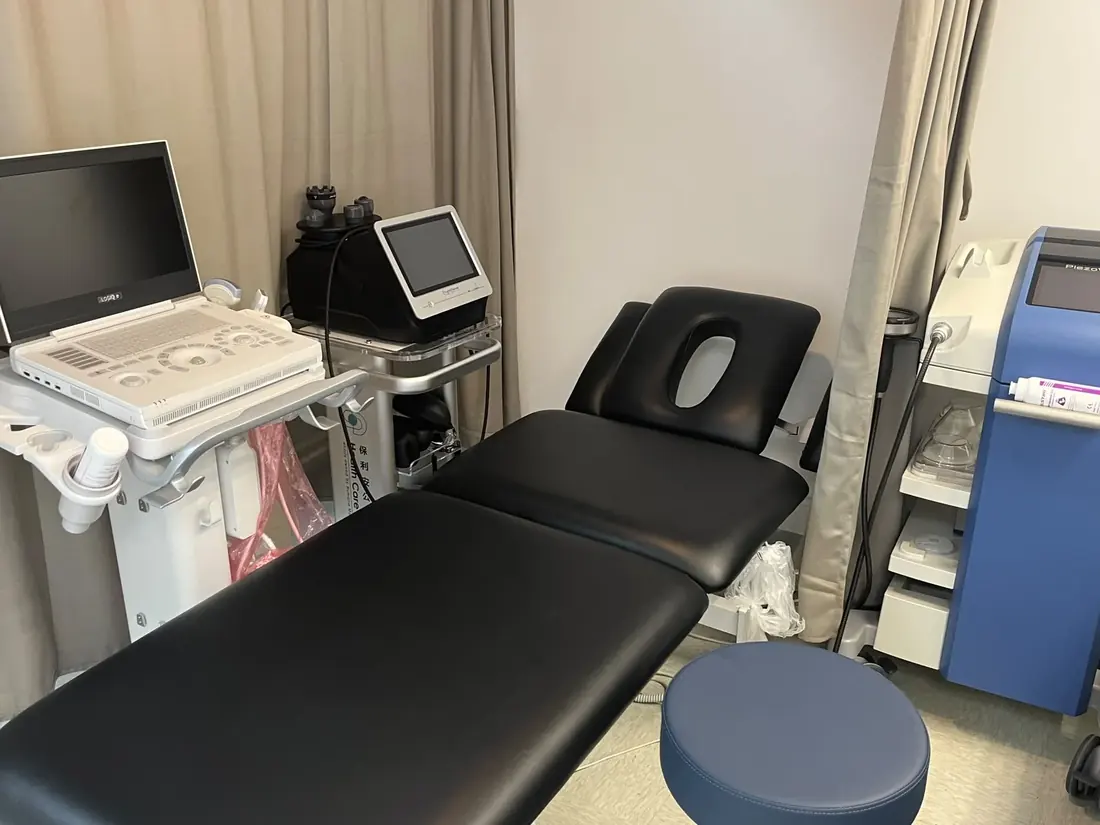
Treatment needs to address pain relief, movement and muscle function together. Our clinic provides a range of treatment equipment alongside exercise and rehabilitation training, combining options according to the cause and stage of rehabilitation.
High-intensity laser therapy (HILT) is used to reduce neck and shoulder pain and improve range of movement, helping patients turn, stretch and perform rehabilitation exercises more comfortably.
Pulsed electromagnetic field therapy (PEMF) and interferential current therapy (ICT) are adjuncts for symptom management. They are combined with other treatment, with the aims of easing pain and making movement more comfortable.
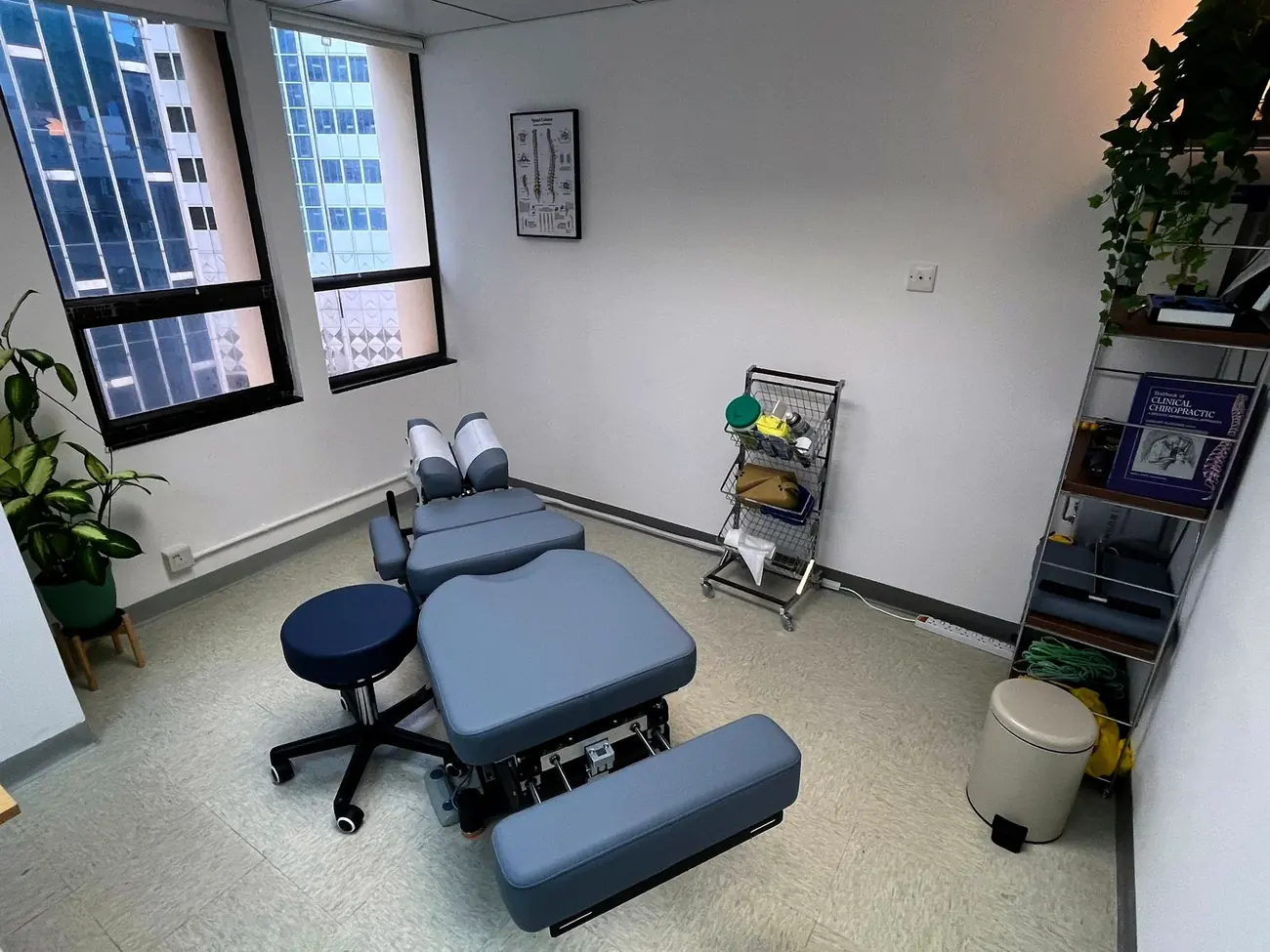
Cox traction and decompression uses a treatment table with controlled, gentle traction and mobilisation techniques to address neck stiffness and restricted movement. It is also an adjunct for neck pain accompanied by nerve-root symptoms.
Extracorporeal shockwave therapy (ESWT) mainly targets neck and shoulder myofascial pain and trigger points, helping reduce pain sensitivity so patients can gradually resume activity and training.
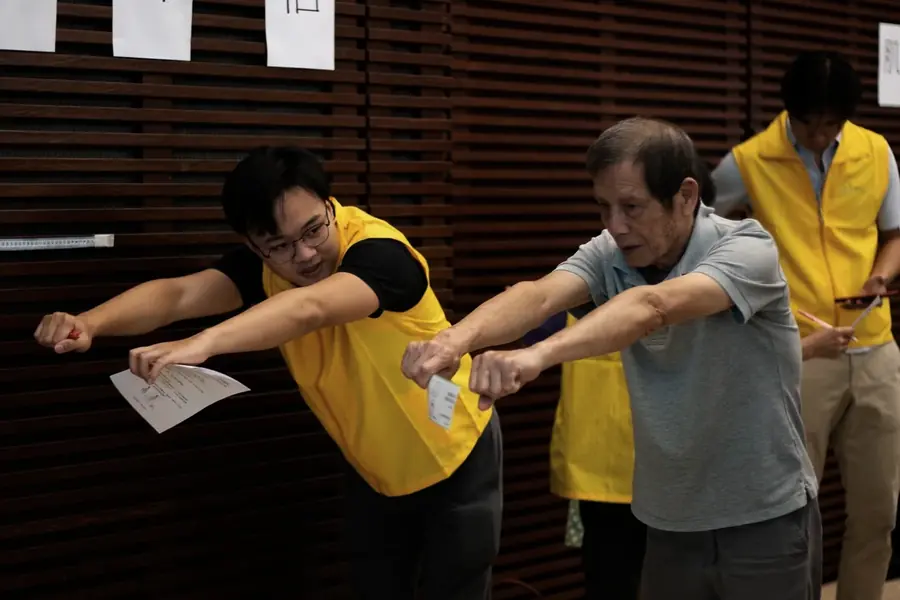
Exercise and rehabilitation training: the clinic has an exercise and rehabilitation area where patients are taught deep neck muscle control, shoulder-blade stability, strength, endurance and range-of-movement training. This work focuses on rebuilding the neck and shoulders’ capacity for work, sport and everyday loads. Home practice helps carry improvement into daily life.
Pain disappearing does not mean rehabilitation is complete
Pain reduction is an important step forward. For patients with soft-tissue injuries, however, being pain-free does not mean the injured tissue has fully healed. If exercises and treatment stop as soon as pain settles, followed immediately by a return to the previous workload, symptoms may return and leave the impression that neck pain never completely resolves.
5. How does a chiropractor assess neck pain?
Assessment begins with a detailed history. We ask about the location, nature and duration of pain, what brings it on, the injury history, previous health problems and its effects on daily life. Red flags are screened at the same time to identify causes needing priority referral.
The physical examination follows, including neck range of movement, muscle and joint palpation, strength, sensation, reflexes and relevant orthopaedic tests. This helps distinguish whether pain is more likely to involve muscles, joints or nerves and assesses movement restriction and functional difficulty.
Diagnostic ultrasound may be added when muscles or nearby soft tissues need closer observation, showing their structure and changes during movement. If bones, discs, nerve roots or the spinal cord need assessment, referral is made for X-rays or MRI.
After bringing the history and examination findings together, the chiropractor establishes a clinical diagnosis and explains the condition and treatment direction. A plan is then developed jointly, taking account of the patient’s expectations, daily needs and rehabilitation goals. Whether the aim is better sleep, managing everyday work or returning to sport, specific progress measures are set and reviewed at follow-up so the plan can be adjusted.
5. When is emergency or urgent medical care needed?
Sudden facial droop, one-sided limb weakness, speech difficulty or a severe unusual sudden headache with neurological symptoms requires immediate emergency help. Suspected neck injury after major trauma also needs emergency assessment before movement testing. (Reference 5)
New or significantly worsening unsteady walking, hand clumsiness, limb weakness or bladder or bowel changes needs urgent medical review. Fever, feeling significantly unwell, a cancer history or progressive deterioration also warrants timely medical assessment, rather than routine treatment alone.
Common questions
Q1: Should I stretch every day when my neck hurts?
If neck pain is caused by muscle strain, regular daily stretching can indeed relieve pain. However, the direction of the stretch must target the muscle causing the pain. If the cause is not muscle strain, stretching the neck in the wrong direction may worsen the condition.
For example, a patient with neck and shoulder pain frequently stretched the muscles at the back of the neck, but symptoms kept returning without improvement. Examination identified a cervical disc herniation, and the stretching movement was the very action aggravating it.
Q2: Can changing my pillow improve neck pain?
People sleep for about seven to nine hours each day. A suitable pillow supports the cervical spine during sleep and maintains its normal curve, allowing neck muscles to rest fully. Choosing the right pillow can effectively prevent waking with a stiff neck. If an unsuitable sleeping position is the cause of neck pain, changing to a suitable pillow is crucial to recovery.
Q3: Can neck pain still be treated if there are bone spurs?
A bone spur is not actually a sharp spike. It is extra bone produced as a joint experiences long-term loading, wear or degeneration, as the body tries to maintain joint stability. In three dimensions, the bone grows irregularly along the edge of a joint or vertebra. An X-ray turns that three-dimensional structure into a flat image, so a projection at the bone edge may look like a pointed spike.
Inflammatory symptoms arise only when a bone spur compresses a nerve. Therefore, reducing inflammation and subsequently improving joint stability through rehabilitation exercise can effectively treat symptoms caused by cervical degeneration.
Q4: Are spinal adjustments, realignment or neck cracking dangerous?
High-velocity low-amplitude manipulation (HVLA), often called cracking or realignment, uses a brief, small and controlled thrust to address joint pain and restricted movement. Serious events such as stroke and cervical artery dissection have also been reported after treatment. They are rare but must be taken seriously. But is HVLA actually the cause of stroke?
A study of stroke cases found that patients were more likely to have visited a chiropractor before a stroke, but a similar association was seen with visits to primary care doctors. It found no additional stroke risk for chiropractic care relative to primary care. The authors considered one important explanation to be that patients already had an arterial dissection and sought care for early neck pain or headache before the stroke occurred. Identifying unusual symptoms before treatment is therefore important. The study also does not prove that manipulation has no vascular risk.
How does HVLA reduce pain?
Recent research suggests that the mechanism of HVLA is much more complex than the cracking sound. It involves sensory input and the nervous system’s regulation of pain perception. Stimulation of the joint capsule, muscles and surrounding tissues changes incoming nerve signals, affects the sense of body position and movement known as proprioception, and contributes to pain regulation in the spinal cord and brain. This helps explain why some patients experience less pain and smoother movement after treatment.
Another hypothesis concerns synovial folds within the facet joints. If these tissues become trapped, they may cause pain and restricted movement. Brief separation of the joint surfaces during manipulation may help release the trapped tissue.
The cracking sound is not the treatment goal
The cracking sound during manipulation is generally associated with rapid separation of joint surfaces, a change in joint-fluid pressure and the formation of a gas cavity. It does not mean a bone has been pushed back into its correct position.
References
This article provides general health information and does not replace an individual clinical assessment.