Will sciatica get better? Symptoms, relief and treatment options
Your next step: record where symptoms travel and which positions make daily activity easier. We can assess strength, sensation and movement, explain the findings and plan suitable activity and rehabilitation, with medical referral when the nerve findings require it.
Sciatica care starts with changes in leg pain, sensation, strength and everyday movement. A neurological assessment helps guide activity, rehabilitation and other treatment. New or increasing weakness, altered groin sensation or bladder symptoms need medical care first. Reference 1
Four key points
On this page
1. What is sciatica, and what causes it?
Sciatica commonly refers to pain travelling from an irritated nerve root in the lower back into the buttock and leg. A herniated disc can inflame or press on a nerve root. Narrowing around the spinal nerves can also be involved. Leg pain may be worse than back pain, and some people have little back pain. Reference 1
If strength, sensation or reflexes are affected as well, this may indicate lumbar radiculopathy, meaning loss of nerve root function. A NeuPSIG paper in Pain recommends distinguishing this from nerve root pain alone and pain referred from other spinal tissues. The paper explains terminology. It does not compare treatments. Reference 2
2. How do buttock pain, numbness and sciatica differ?
Burning, electric pain or tingling down one leg towards the calf or foot may involve a nerve. Symptoms do not always follow a textbook diagram. Pain only in the buttock may instead come from the hip, tendons or other tissues. A tender spot alone cannot diagnose piriformis syndrome.
Numbness can also come from nerves outside the spine. A clinician reviews where and when symptoms occur, then checks strength, sensation and reflexes. Lower back and hip movement may also need checking. A straight leg raise test is one part of this. Trying it at home cannot confirm nerve compression. Reference 2
3. Why can sitting, bending or coughing aggravate it?
When neural and surrounding tissues are sensitive, particular positions or movements may provoke symptoms. Leg pain with coughing or sneezing is useful history to report, but these responses alone do not establish the cause or severity. Reference 1
Notice how long you can sit, whether changing position helps, and whether pain spreads farther down the leg. Alternating sitting, standing and short walks is often more practical than holding one rigid posture all day. A flare-up does not automatically mean bending or lifting must be avoided permanently.
4. What can you do during a flare-up?
1. Keep moving at a level you can manage, dividing walks or chores into shorter periods rather than resting in bed for long stretches.
2. Temporarily reduce movements or loads that clearly provoke leg pain.
3. If warmth feels helpful, use a wrapped heat pack briefly, taking extra care over numb skin.
4. Record changes in leg pain, numbness, sleep and walking for review. Reference 1
Do not push a stretch that sends pain farther down the leg, increases numbness or produces weakness. Progress is about how you recover afterwards and what you can do in daily life, not simply completing repetitions through pain. New weakness needs medical assessment rather than an exercise adjustment alone.
5. Which symptoms need urgent medical care?
New difficulty passing urine, urinary retention, altered bladder or bowel control, or reduced sensation around the genitals or anus requires immediate emergency assessment. Bilateral sciatica or severe or rapidly worsening numbness or weakness in both legs also needs emergency care. Possible cauda equina syndrome should not be left until complete incontinence develops. Reference 1 Reference 3
New difficulty lifting the foot, repeated tripping or clear weakness in one leg needs prompt medical assessment, preferably that day. Rapid worsening needs emergency care. Fever, a major injury, a history of cancer or feeling generally very unwell also needs timely medical review. Reference 4
6. Do you need an MRI?
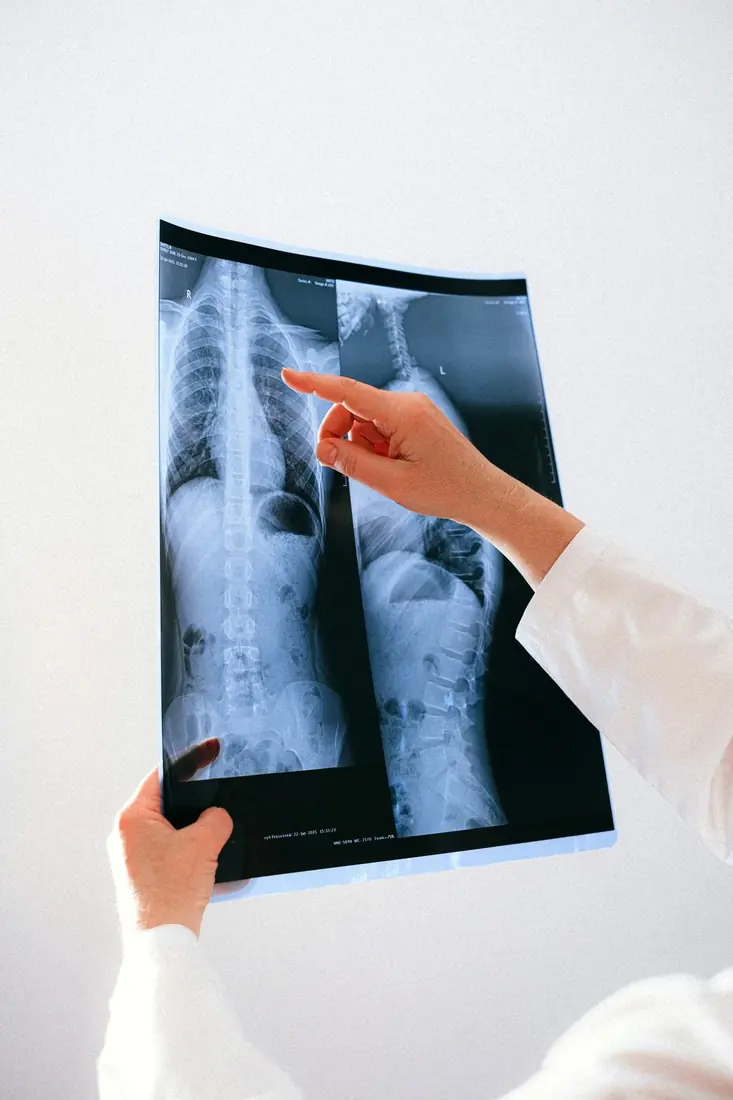
Not everyone with sciatica needs an immediate magnetic resonance imaging (MRI) scan. A scan is useful when it could change care, such as checking serious compression or helping plan an injection or operation. Looking for degeneration alone may not help decide treatment. Reference 5
The side and level described in the report need to fit your symptoms and nerve examination. If your right leg hurts but the report describes only left-sided changes, the clinician should review that mismatch. The report is not a complete diagnosis on its own.
7. What treatments are available, and is surgery necessary?
For stable symptoms without emergency warning signs, education, activity adjustments and progressive exercise can be discussed. Manual therapy may suit some people as part of active rehabilitation. NICE advises against traction for low back pain or sciatica. Treatment should not be described as pushing a disc back into place. Reference 5
Persistent severe leg pain or difficulty with daily activities despite appropriate care without surgery, with matching imaging, can justify specialist discussion of injections or surgery. A 2023 BMJ review found faster leg-pain relief with discectomy in selected patients with disc-related sciatica, but its advantage over care without surgery decreased over time and evidence certainty was low. It does not mean all leg pain needs surgery. Reference 6
8. How does the clinic assess sciatica?
The chiropractor will ask when symptoms began, where leg pain travels and whether numbness or strength has changed. They will also ask about walking, sleep, work and medicines. Examination may check lower back and hip movement, leg strength, sensation, reflexes and how nerves respond to movement. This helps decide whether rehabilitation or medical referral is appropriate.
If ten minutes in a car brings on symptoms, how long you can sit is a useful progress measure. If you are tripping, strength and walking safety need priority. An assessment should explain the findings and why a particular next step is recommended.
9. Frequently asked questions
Q1: Can you have sciatica without back pain?
Yes. Leg symptoms may dominate, although their cause still needs clinical assessment.
Q2: Does buttock pain mean the piriformis is trapping a nerve?
Not necessarily. The lower back, hip and nearby soft tissues can all cause buttock pain. Tenderness alone cannot tell them apart.
Q3: How long does sciatica take to improve?
Many improve over weeks to months, while some take longer. Review pain, nerve function and daily activity together rather than promising a fixed recovery date. Reference 1
Q4: Should you rest completely?
Prolonged bed rest is generally unhelpful. In the absence of warning signs, keep active at a level you can manage and build up gradually.
Q5: Should you hold a stretch longer if numbness increases?
Do not push through increasing numbness. Stop or reduce the movement and seek advice. Numbness that keeps worsening or comes with weakness needs medical review.
Q6: Does a larger disc herniation always mean more pain?
Size alone is insufficient. Location, matching symptoms and nerve function matter.
Q7: Does pain relief prove full nerve recovery?
No. Numbness, strength and activity may still need monitoring or reassessment after pain improves.
Q8: When should you arrange an assessment?
Arrange assessment when persistent or recurrent symptoms interfere with sitting, walking, work or sleep. New weakness or emergency warning signs need the appropriate medical care first.
References
- NHS. Sciatica. Patient information.
- Schmid AB, et al. Recommendations for terminology and the identification of neuropathic pain in people with spine-related leg pain. Pain. 2023;164:1693–1704. doi:10.1097/j.pain.0000000000002919.
- Vaishya S, et al. Cauda equina, conus medullaris and syndromes mimicking sciatic pain: WFNS spine committee recommendations. World Neurosurg X. 2024;22:100274. doi:10.1016/j.wnsx.2024.100274.
- NHS. Foot drop. Patient information.
- NICE. Low back pain and sciatica in over 16s: assessment and management. NG59. Recommendations.
- Liu C, et al. Surgical versus non-surgical treatment for sciatica: systematic review and meta-analysis of randomised controlled trials. BMJ. 2023;381:e070730. doi:10.1136/bmj-2022-070730.
Written by: Dr Mica Leung (Hong Kong Registered Chiropractor, Registration No. 436) · Dr Lui Kwan Long (Hong Kong Registered Chiropractor, Registration No. 449) · Dr Yip Siu Ho (Hong Kong Registered Chiropractor, Registration No. 441)
This article provides general health information and does not replace an individual clinical assessment.