Wrist pain: causes, relief and when to seek medical care
Your next step: note which grip or daily task is difficult and temporarily reduce a clearly aggravating load. After checking injury and nerve concerns, we can help choose suitable support, movement and strengthening, with a plan for returning to work or sport.
Wrist pain, thumb-side pain when lifting a child or night-time hand numbness can be assessed through injury history, movement and nerve checks. Distinguishing tendon, joint, bone and nerve problems helps guide support, activity changes and rehabilitation.
Key points
On this page
1. What commonly causes wrist pain?
The wrist contains small bones, ligaments, tendons and nerves. A sprain or repeated loading may cause discomfort, but fractures, tendon problems, nerve compression and arthritis also need consideration. Pain in the same place does not always have the same cause.
A wrist lump also needs its nature confirmed rather than being assumed to be a ganglion. Persistent swelling and morning stiffness, especially with several finger joints affected, warrant prompt medical assessment for possible inflammatory arthritis and referral.6
2. Why do typing, lifting a child or push-ups hurt?
These activities place different demands on the wrist. Lifting with the thumb spread and wrist bent sideways may provoke thumb-side pain. Wringing a cloth and turning a handle involve grip and rotation. Push-ups load the wrist while it is bent backwards.
Record the most painful movement, how long you can do it and how you feel the next day. This is more useful than assuming you have simply used the hand too much. Computer work may bring on symptoms, but your occupation alone cannot diagnose carpal tunnel syndrome or establish a need to stop working.
3. How do de Quervain's, TFCC problems and carpal tunnel differ?
De Quervain's affects tendons passing through a sheath on the thumb side. Lifting the thumb or objects may hurt. The TFCC helps support the little-finger side during loading and forearm rotation. Carpal tunnel syndrome involves pressure on the median nerve, often causing thumb, index and middle finger tingling, particularly at night.834
These are clues. One pressure, wrist-bending or weight-bearing test cannot establish the diagnosis. Little-finger numbness, symptoms that change with neck movement or increasing weakness calls for a broader examination.
4. What can you try without a clear injury?
Reduce the most painful tasks, such as heavy one-handed lifting, repeated twisting or prolonged weight-bearing through the palm. Share the load between both hands, choose a comfortable wrist position and change tasks during work. Complete immobility is not always needed, but repeatedly testing a painful movement is unhelpful.
Choose a support for the problem. A near-neutral night wrist splint is an option for mild to moderate carpal tunnel syndrome, supported by a 2026 clinical guideline. De Quervain's may need support that includes the thumb. Adjust a support and seek advice if it increases numbness or changes finger colour.58
5. When is medical care urgent?
A deformed wrist, cold or discoloured fingers or loss of sensation after a serious injury needs emergency care. A hot, red, swollen and severely painful wrist with fever or feeling unwell also needs urgent medical assessment.1
Persistent thumb-side pain after a fall, difficulty gripping or difficulty loading the hand needs prompt follow-up even if the first X-ray is normal. Increasing weakness, dropping objects or muscle wasting should not be managed by indefinitely wearing a splint.24
6. Do you need an X-ray, ultrasound or MRI?
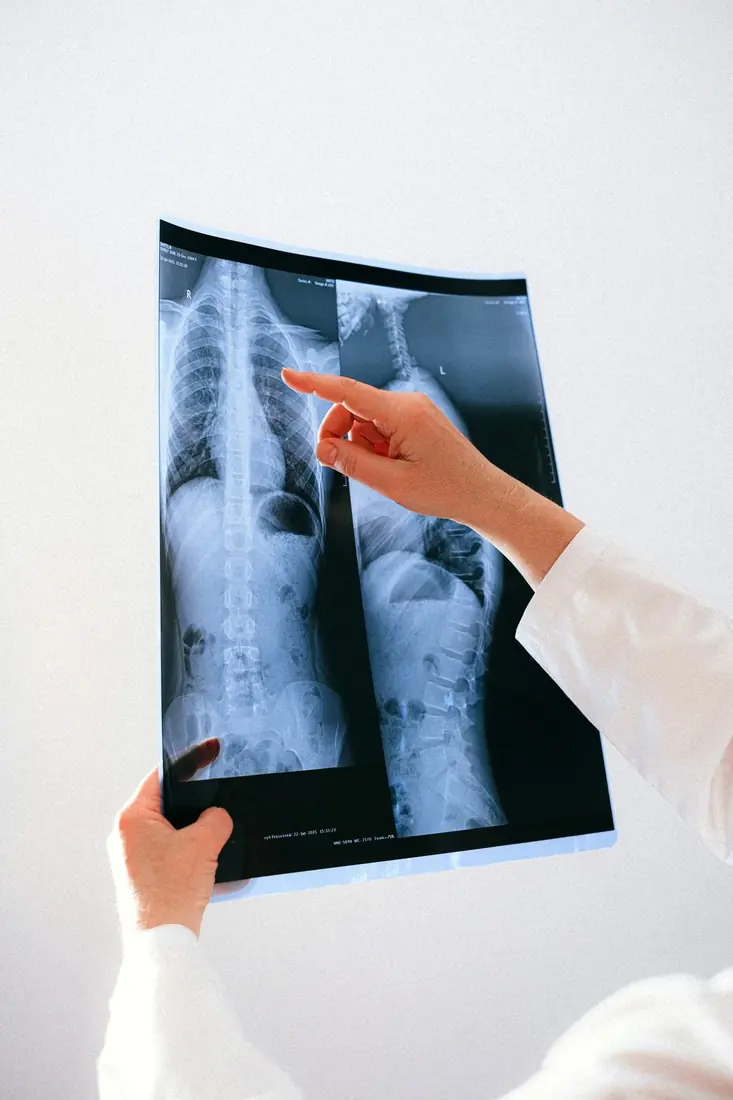
A test should answer a question that changes care. X-rays help assess suspected fractures, but an early scaphoid fracture may not appear. Ultrasound can assess selected tendon, cyst and nerve problems. MRI may help investigate bone and soft tissue when indicated.27
An image alone cannot identify the painful structure. For chronic wrist pain that needs imaging, ACR guidance generally starts with radiographs, followed by tests chosen for the findings and suspected problem. Not everyone needs MRI first.7
7. What treatment and rehabilitation can help?
First decide whether protection or referral is needed, then choose activity changes, support and progressive exercise. Fractures, instability, nerve compression and tendon problems need different plans. Some people with de Quervain's or carpal tunnel syndrome may discuss injection or surgery with a doctor.
The AAOS 2024 carpal tunnel guideline distinguishes short-term relief from lasting improvement after steroid injection.4 Hands-on or machine treatment used for symptom relief should have a clear purpose. It should not be described as repairing a tear. Avoid forceful twisting and palm-loading exercise after a recent injury until fracture and instability have been considered.
8. What does an assessment involve?
History includes the injury, work and sport, which fingers feel numb and night symptoms. Examination can assess movement, grip, sensation and strength, with the forearm and neck included when relevant. Findings should be related to difficulties such as lifting a cup, opening a jar or holding a child.
Bring symptom notes and previous imaging if daily activities remain difficult. These help guide further tests, rehabilitation or referral. Seek medical care first for emergency warning signs.
9. Common questions about wrist pain
Does hand numbness always need neck imaging?
No. First distinguish a possible wrist, forearm or neck source, then choose any tests needed.
Can you massage or stretch it?
Recent injury, significant swelling or suspected instability needs assessment first. Gentle suitable movement differs from forceful stretching.
Does a lump need surgery?
First establish what it is. A confirmed ganglion with few symptoms can sometimes be observed. Do not puncture it yourself.9
How long does recovery take?
Bone, tendon, nerve and ligament problems recover differently. Follow changes in grip, movement and symptoms rather than expecting one deadline for everyone.
References
- NHS. Wrist pain.
- Clementson M, et al. Acute scaphoid fractures: guidelines for diagnosis and treatment. EFORT Open Reviews. 2020.
- Choi SI, Malik S, MacLean S. The Natural History of Non-operatively Treated Traumatic Triangular Fibrocartilage Complex Tears: A Systematic Review. Journal of Wrist Surgery. 2024;13:550–558.
- American Academy of Orthopaedic Surgeons. Management of Carpal Tunnel Syndrome Evidence-Based Clinical Practice Guideline. 2024.
- Hand Pain and Sensory Deficits: Carpal Tunnel Syndrome: Revision 2026. Clinical Practice Guidelines. Journal of Orthopaedic & Sports Physical Therapy. 2026.
- NICE. Rheumatoid arthritis in adults: management. NG100.
- American College of Radiology. ACR Appropriateness Criteria: Chronic Hand and Wrist Pain. Revised 2023.
- British Society for Surgery of the Hand. De Quervain's syndrome.
- British Society for Surgery of the Hand. Ganglion cysts.
Written by: Dr Mica Leung (Hong Kong Registered Chiropractor, Registration No. 436) · Dr Lui Kwan Long (Hong Kong Registered Chiropractor, Registration No. 449) · Dr Yip Siu Ho (Hong Kong Registered Chiropractor, Registration No. 441)
This article provides general health information and does not replace an individual clinical assessment.